Service · AI + XR
Language models, computer vision and speech integrated into XR experiences
VeleStudio integrates language models, computer vision, speech and generative AI into Unity XR experiences, grounded in curated content, low-latency and privacy-aware.
What it is
AI + XR means placing artificial intelligence (language models, computer vision, speech recognition and synthesis, generative systems) inside spatial experiences so that they can perceive the world, understand people and respond in context. A conversational guide that answers questions about the object in front of the camera, a VR character that reasons about what the player has done, an environment that generates itself around a visitor's interests: each combines a perceiving layer, a reasoning layer and a spatial presentation layer.
The engineering challenge is that XR is real-time and embodied while most AI services are slow, remote and text-based. VeleStudio designs the architecture that reconciles them: what runs on the device (tracking, lightweight vision, wake words), what runs in the cloud (large models, retrieval), how latency is hidden by interaction design, and how the system degrades when the network or the model fails.
We are also careful about what these systems are allowed to say. For guides and agents we ground answers in curated content supplied by the client, constrain the model to that material and make it clear when it does not know. VeleStudio builds AI + XR experiences for cultural institutions, product teams, education and research, and we are candid about what the technology cannot yet do well.
What problems it solves
- 01
Guides that only know their script
Pre-recorded audio guides cannot answer the question a visitor actually has. A grounded conversational agent answers from the institution's own material and refers to what the person is looking at.
- 02
Virtual worlds that feel scripted
Characters with fixed dialogue trees and environments that never change wear out quickly. Language models and generative systems let narratives adapt to what people do, within boundaries the author sets.
- 03
Models that make things up
A general-purpose language model will invent dates, names and facts with confidence. We use retrieval over approved content, strict instructions, answer checking and refusal paths so that the experience stays trustworthy.
- 04
Latency that breaks presence
A three-second pause after a question kills the illusion of a conversation. We combine on-device models, streamed responses, speech synthesis that starts before the answer is complete, and interaction design that makes waiting natural.
Who it is for
- Museums, heritage sites and cultural institutions
- Product teams building XR, wearable and spatial-computing applications
- Education providers and training organisations
- Research groups studying intelligent agents, conversation or embodied AI
- Agencies and studios adding intelligence to immersive productions
Example applications
- Conversational guides that see
- A phone or headset agent that recognises the object or place in view, answers spoken questions from curated content and switches language on request.
- Intelligent characters in VR
- Non-player characters that hold open-ended conversations, remember what the player did and stay in role, for training, education and narrative experiences.
- Adaptive narratives
- Stories whose pacing, detail and emphasis change with the visitor's interests and behaviour, generated within authored constraints.
- Generative environments and installations
- Spaces where imagery, sound and 3D content are generated live in response to the people present or to live data.
- Computer vision for context
- Recognising artefacts, products, rooms or situations so that content appears without markers or menus.
How we approach AI + XR projects
01
Define what the system may and may not do
Scope, sources of truth, tone, languages and what happens on an out-of-scope question. This becomes the specification both for the model and for evaluation.
02
Content and grounding
We structure the client's existing material (catalogues, scripts, documents) into a knowledge base the model retrieves from, and agree how it will be maintained.
03
Architecture
Which models run where, latency budgets, cost per session, privacy requirements and offline behaviour, chosen per project rather than by default.
04
Spatial interaction design
How the agent is addressed, how it shows what it has recognised, how it speaks, and how waiting and uncertainty are presented.
05
Prototype and red-team
An early build on the real device, tested with real questions, including deliberate attempts to make it hallucinate or leave its role.
06
Deployment and monitoring
Launch with logging of conversations (anonymised as agreed), review of failure cases and periodic updates to content and prompts.
Technology we use
Tools chosen for the experience, not the other way round. The full ecosystem is on the expertise page.
Related work
All work →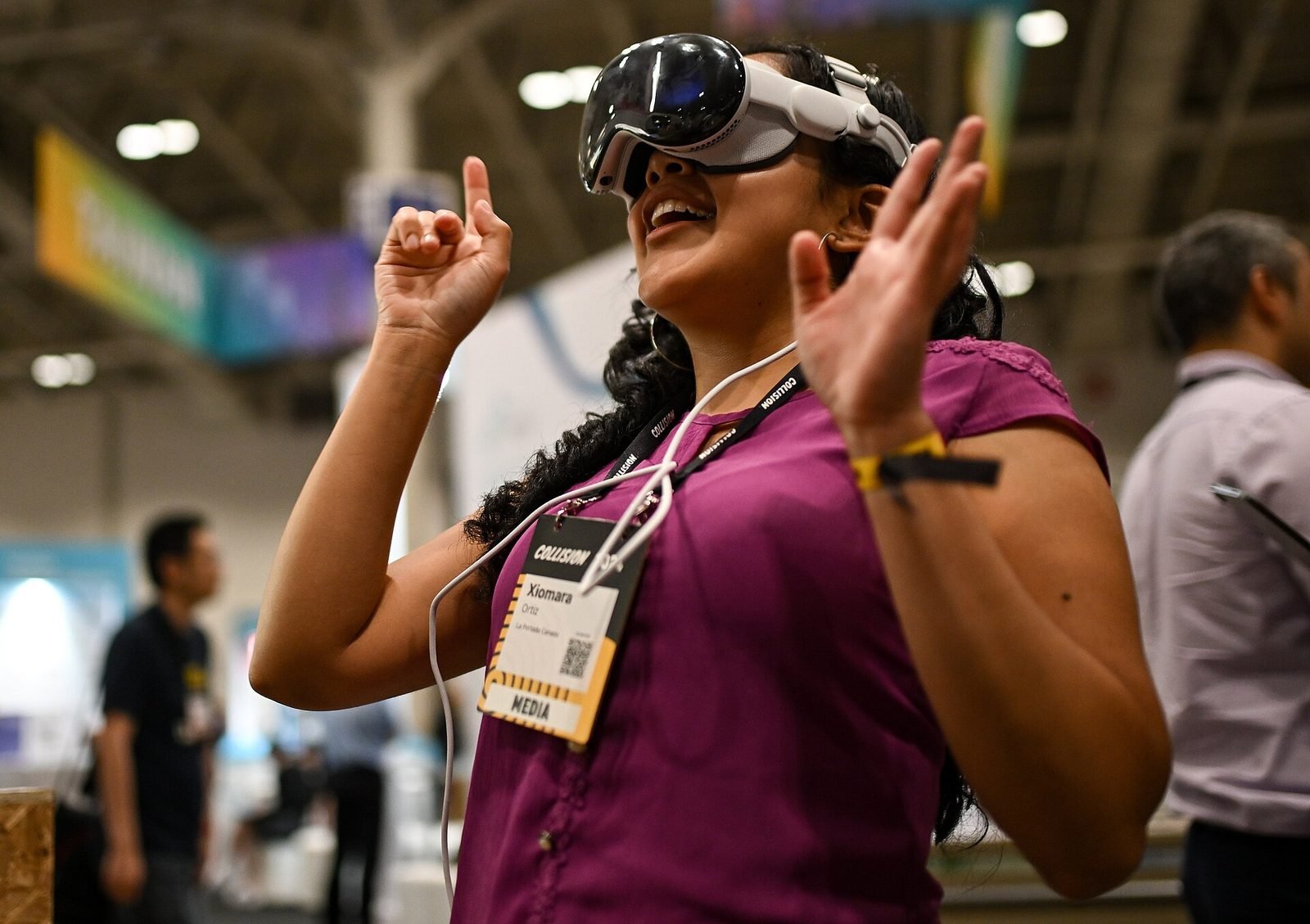
01AI, XR·Studio prototype, 2026
Spatial Guide: an AI agent that answers questions about what you are looking at
A headset prototype where a visitor looks at an object, asks a question by voice and gets an answer grounded only in a curated knowledge base, pinned to the object.
- Unity
- C#
- OpenXR
- Meta Quest SDK
Further reading
How AI is changing immersive experiences (and where it is not)
AI gives XR experiences perception, conversation, adaptation and generated content. Where it adds value, how to architect it, and where it still falls short.
How museums can use AR and XR: a practical guide for cultural heritage
How museums and heritage sites use AR, VR and mixed reality: use cases, phones versus loan devices, curatorial constraints, content pipelines and pilots.
What is spatial computing?
Spatial computing is computing that senses, maps and uses the physical space around a device, so digital content and interaction happen in place.
FAQ